 Italiano
 Inglese
Welcome to Our Blog - Come i quadri di bassa qualità minano silenziosamente la tua produttività
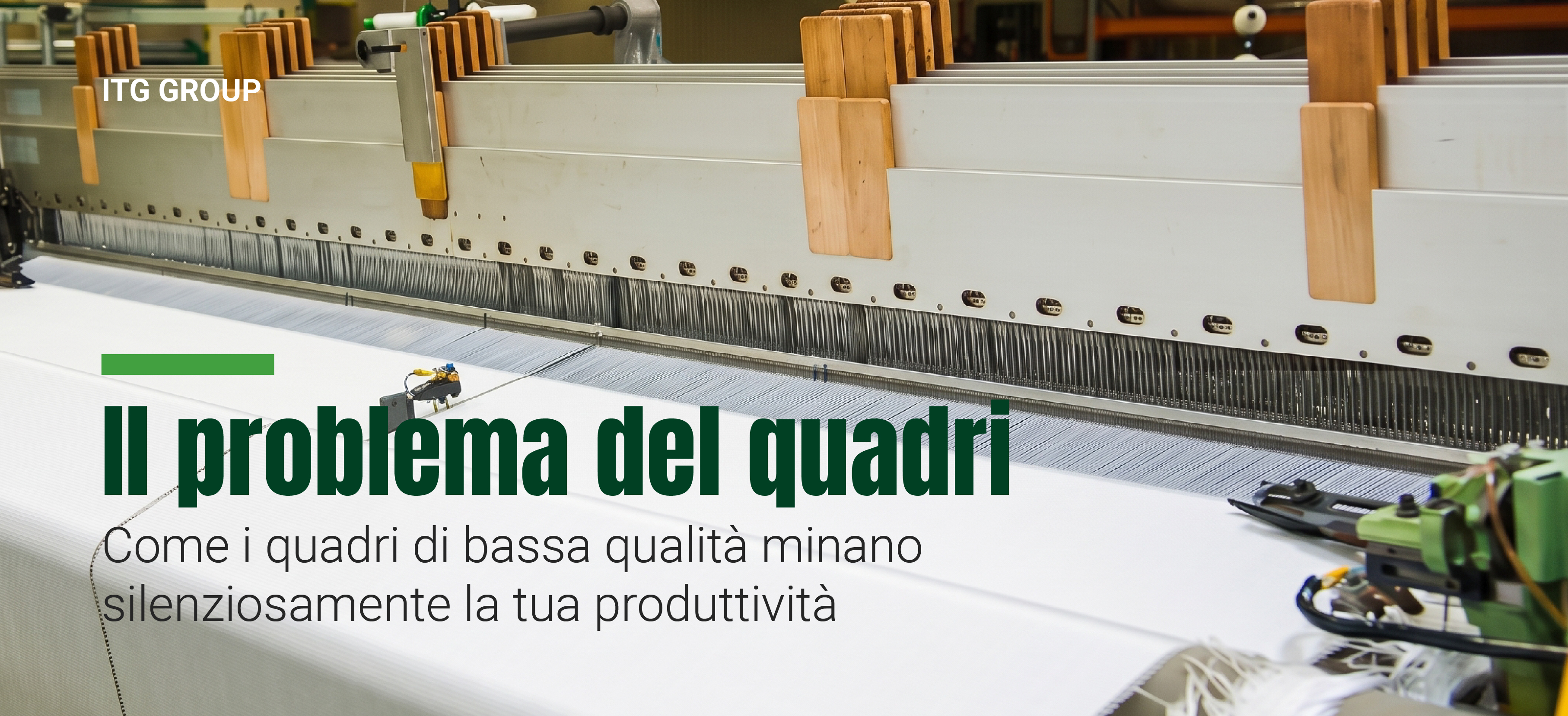
Come i quadri di bassa qualità minano silenziosamente la tua produttività
- Technical
- Aug 03, 2026
Come i quadri di bassa qualità minano silenziosamente la tua produttività
Chiedi a qualsiasi responsabile di produzione cosa ferma i suoi telai e sentirai parlare di qualità del filato, umidità, età delle macchine. Ciò che raramente viene menzionato è il componente che compie milioni di cicli di movimento proprio al centro di tutto: il quadro.
È un punto cieco — perché i numeri dicono che i quadri meritano molta più attenzione di quella che ricevono.
Uno studio sulle fermate in una tessitura ad aria ha rilevato che il 58% di tutte le fermate era causato da rotture di ordito — di gran lunga la categoria più grande, davanti alle rotture di trama (34%) e a tutto il resto messo insieme (8%). Ed ecco il dettaglio che conta per questo articolo: il punto in cui l’ordito si rompe determina quanto a lungo il telaio resta fermo. Una rottura vicino al pettine si ripara con un nodo rapido. Una rottura nella zona dei quadri e delle lamelle richiede molto più tempo — il tessitore deve identificare il filo di licci interessato, ripassare il filo e riavviare.
Lo stesso corpo di ricerca colloca la riparazione media di una rottura di ordito intorno ai 2,87 minuti. Sembra poco — finché non lo moltiplichi per ogni telaio, ogni turno, ogni giorno. Una tessitura con decine di telai e un tasso elevato di rotture di ordito perde ore intere di produzione ogni giorno, una fermata “piccola” alla volta.
Il quadro sopporta milioni di cicli di movimento ad alta velocità, interagendo costantemente con i fili di licci e sostenendo la tensione dell’ordito. La ricerca sulla progettazione dei quadri lo identifica come uno dei componenti del telaio più responsabili di vibrazioni e rumore — e la vibrazione è proprio ciò che limita le prestazioni ad alta velocità.
Quando un quadro è costruito male o usurato, la reazione a catena è questa:
1. L’eccesso di vibrazione trasferisce stress ai fili di ordito a ogni ciclo di apertura del passo.
2. I fili sotto stress si rompono più spesso — alimentando quella categoria del 58% delle fermate.
3. Quadri usurati o disallineati costringono le tessiture a ridurre la velocità del telaio solo per continuare a produrre.
4. I quadri che non reggono si usurano più in fretta, raddoppiando la frequenza di sostituzione — e raddoppiando il tempo di fermo che ogni sostituzione comporta.
L’analisi dei componenti di tessitura nel settore è chiara al riguardo: un quadro di bassa qualità o usurato non riduce soltanto la velocità di tessitura — causa rotture del filo di ordito, genera difetti sulla superficie del tessuto e aumenta i costi di manutenzione contemporaneamente.
Ogni fermata non pianificata comporta tre costi allo stesso tempo: produzione persa, manodopera inattiva e rischio di qualità. Quest’ultimo è il più sottovalutato — le fermate del telaio non solo interrompono la produzione, lasciano segni di riavvio e differenze nell’assorbimento del colorante tessuti direttamente nel tessuto come difetti visibili. La fermata finisce; il difetto viene spedito.
I benchmark del settore puntano a meno del 10% di tempo di fermo totale per una produzione di tessitura efficiente. Una tessitura i cui quadri stanno silenziosamente gonfiando il tasso di rotture di ordito può superare quella soglia senza che un singolo guasto “importante” compaia mai nel registro di manutenzione.
Quando una tessitura analizza i propri tempi di fermo, il quadro raramente ha una voce dedicata — le fermate vengono attribuite alle “rotture di ordito” e l’analisi si ferma lì. Ma se le rotture di ordito sono la tua principale categoria di fermate, i componenti che toccano quei fili migliaia di volte al minuto meritano di essere il tuo primo punto di ispezione, non l’ultimo.
Un quadro non è un articolo qualunque. Alla velocità di produzione, è la differenza tra un telaio che gira e un telaio che si ferma.
In ITG Group, i nostri quadri di licci per telai ad aria ad alta velocità sono progettati esattamente per questo: durata, costi di manutenzione ridotti e prestazioni stabili fino a 1000 RPM, compatibili con telai Picanol, Toyota e Tsudakoma. Se le fermate ricorrenti stanno consumando le tue ore di produzione, il nostro team tecnico può aiutarti a valutare se i tuoi quadri sono parte del problema.
Fonti: Austin Journal of Textile Engineering (studio sulle fermate dei telai); ricerca sulla progettazione dei quadri e sulle vibrazioni (studi su quadri in materiale composito); analisi di selezione dei componenti VieTextile; benchmark sui tempi di fermo di Textile School.